 For 16 years, every July, Helping Children Worldwide sent teams of volunteer American teachers to teach summer school in an orphanage in Sierra Leone. They provided reading, writing, and mathematical enrichment instruction, believing it would improve children’s performance in Sierra Leonean schools. It was a popular project, and U.S. teachers continued to apply and travel every year, as the teachers loved the time they spent teaching the children and interacting with them.
However, in 2016, leadership at Helping Children Worldwide and the orphanage, called the Child Rescue Centre, had an epiphany as they began researching the effects of institutionalization on children. Their research revealed that living in an orphanage, especially for a long time or at a young age, has negative impacts on a child’s physical, intellectual, and social-emotional development. This ultimately led them to a major change to transition the orphanage to a family-based care model.
Over the next two years, the Children Reintegration Centre worked with the families to build bonds and relationships with their children living in the orphanage and ultimately place the children back into their families. They closed the orphanage and shifted to strengthen local vulnerable families so those children would never need to go to another orphanage again. The Child Rescue Centre was renamed the Child Reintegration Centre, and they began providing access to education, healthcare, and resources that lift vulnerable families out of poverty and crisis. They worked to strengthen families through case management, counseling, training, and mentorship to empower them to care for themselves.
It was during this process of transformation that Helping Children Worldwide realized they would need to change their approach to short-term missions as a part of the Child Reintegration Centre’s holistic shift to family care.
While they had implemented many child safeguarding measures, such as screening volunteers, and ensured volunteers were well-prepared for these trips, trip participants had 70-80 hours of direct access to the children for ten days. This direct engagement was worrying. As they learned about the trauma children living in residential care experience, Helping Children Worldwide came to the painful realization that well-intentioned volunteers spending a lot of focused time and attention on children in residential care caused a repeated cycle of attachment and separation for children who already suffered from attachment issues.
Even the teacher volunteers who enjoyed the individual interactions with children had hesitations about the value of their visits. Laura Horvath, one of those volunteers, worried about teaching from U.S. curriculum materials not contextualized for Sierra Leone. Even though she visited three times and played a supporting role to other teams, she was also never fully convinced that two weeks of intensive instruction would really move the needle in terms of the children’s academic performance overall, and was painfully aware that as much as the volunteer educators tried to learn about how education happens in Sierra Leone, they were never going to fully understand it. For example, Laura and other volunteers had what they thought was a great idea to teach the children a particular way to take notes to help them study. However well-intentioned this idea was, in Sierra Leonean schools children are not permitted to write down anything that the teacher doesn’t expressly tell them to write down and may actually even be punished for doing so.
While these trips were a cornerstone of donor recruitment and church support, Helping Children Worldwide boldly began to explore the pros and cons of ending short-term missions altogether. They conducted surveys, discussions, and interviewed staff of the local programs their mission teams supported on the ground. In the end, they concluded that there was value in short-term mission teams, even beyond the propensity to build dedicated donors, but significant changes needed to be made.
In beginning the transition to family care, the Helping Children Worldwide staff had adopted the mantra “the best way to care for a vulnerable child is to care for the people who care for that child.” If they applied that same mantra to short-term mission activities, they realized they could transform the way that these activities could impact lives in the global south, eliminating harm and increasing positive outcomes.
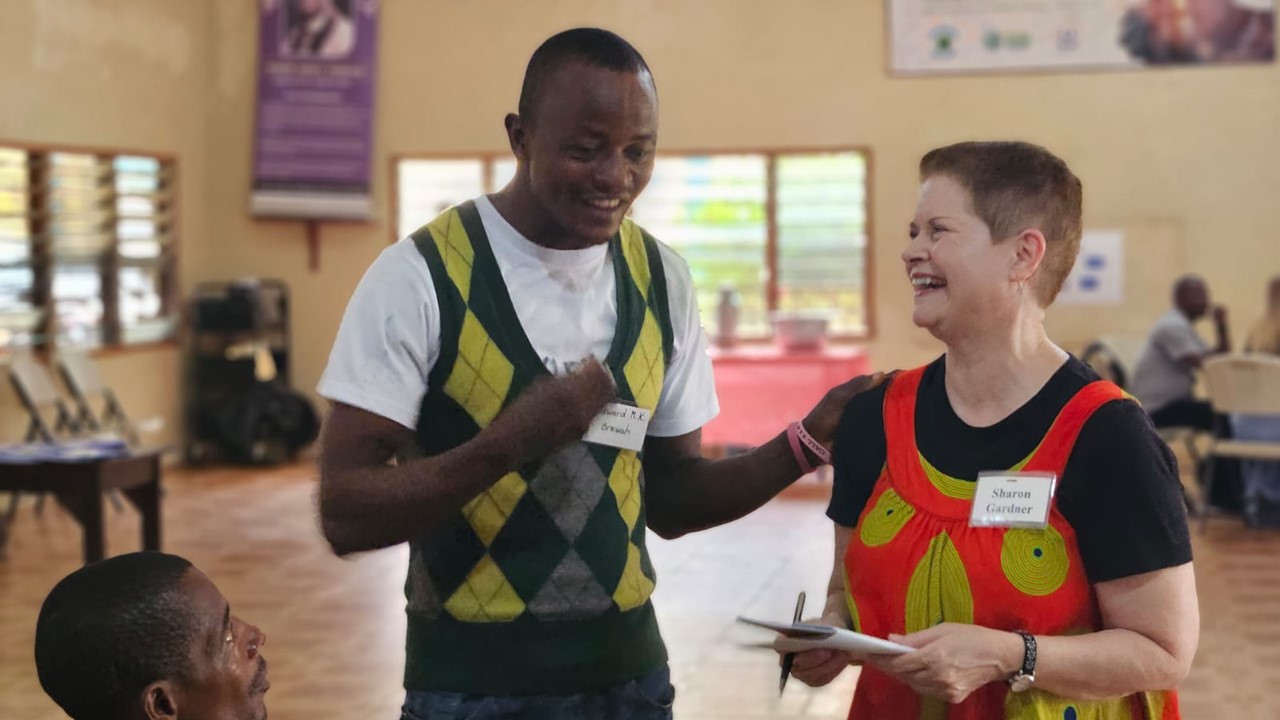
In 2018, Helping Children Worldwide launched a short-term mission project called the “Teachers’ Learning Collaborative” (TLC). The goal was simple; to bring American and Sierra Leonean teachers together for 10 days to talk about how children learn, how to manage classroom discipline, how to engage learners and how both groups could improve their practice. TLC set out from the beginning to not be a training program where US teachers would train Sierra Leonean teachers in how to teach, but rather just an opportunity for educational professionals from two different cultures to share ideas about best practices in teaching and learning. Over the course of several years, American and Sierra Leonean teachers have collaborated on the creation of a teacher training program designed for teachers in Sierra Leone to teach their colleagues. HCW has applied the “TLC approach” to development of other similar projects that place American short-term missions in collegial or support roles with Sierra Leonean leadership firmly in the driver’s seat–including collaboratives for pastors, social workers, counselors, and others.
The success of the TLC has become a model for how Helping Children Worldwide launches and operates other collaborative mission team projects. It takes more planning, greater preparation, and recognition of the ripple effect that moves control of the mission into the hands of those who are most likely to benefit from its success.
Laura eventually came on staff at Helping Children Worldwide and reflected on this shift in their approach to mission trips, saying “It isn’t easy, but like the transition from institutional settings of well-meaning orphanages to family based care, the elimination of unintended consequences is well worth the extra effort. The ultimate exponential increase in rewards and genuine experience of mission success are more meaningful on both sides of the equation.”