Residential Care 2026
In October 2025, Barna Group conducted a study of 3,351 U.S. Christians to examine current support for and perceptions of orphanages, children’s homes, and other forms of residential care for children, as well as changes in knowledge, attitudes, and behaviors since 2020.
KEY FINDINGS
Donations
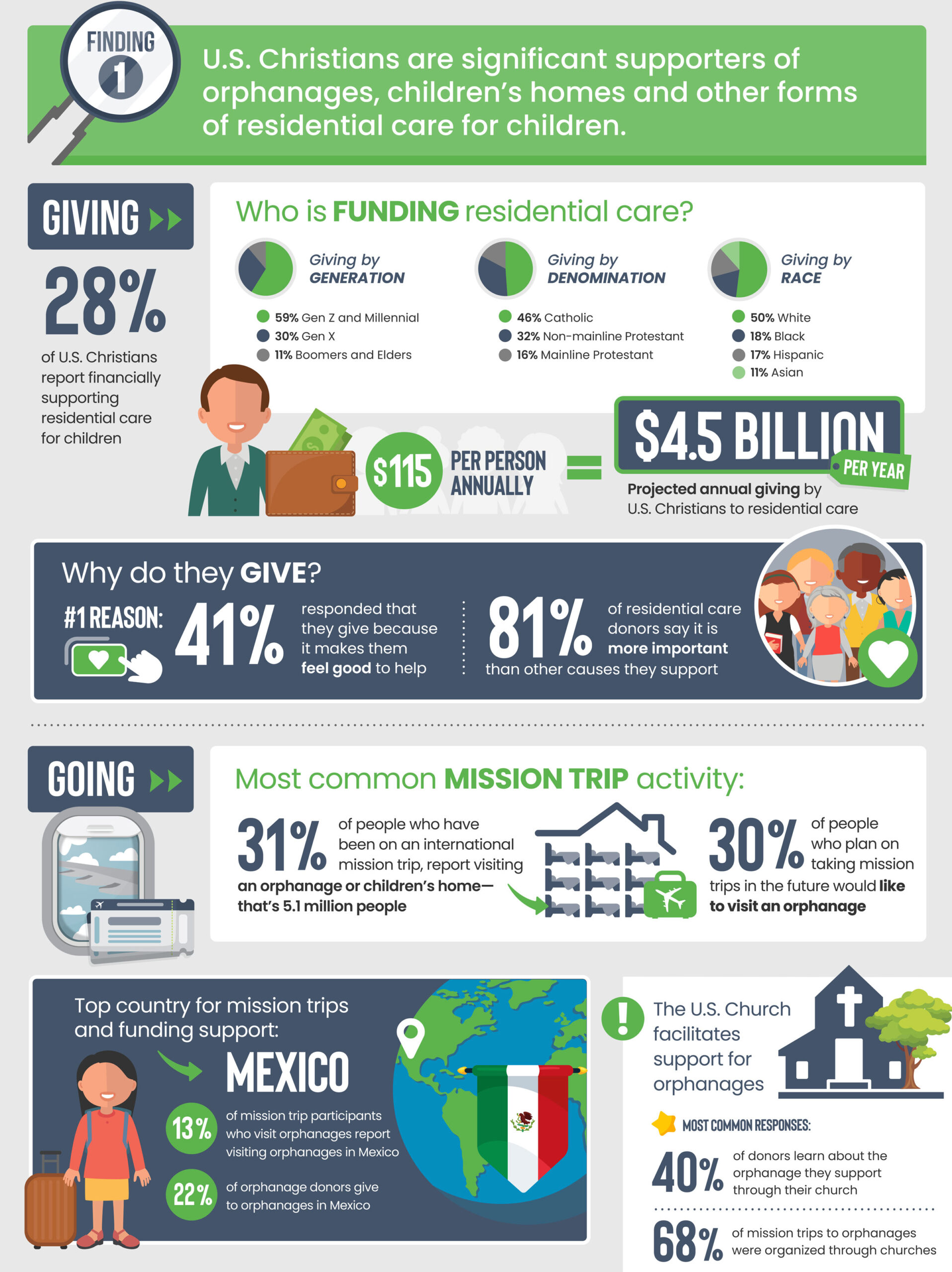
U.S. Christians remain significant supporters of residential care. More than one in four Christians (28%) report financially supporting an orphanage, children’s home, or residential care program. Projected nationally, this equals approximately $4.5 billion in annual giving, with individual donors contributing an average of $115 per year.
Giving is concentrated among younger generations and Catholics. Gen Z and Millennials comprise 59% of donors and Catholics account for 46%. Support is highly prioritized and emotionally driven: 81% of donors say residential care is the most important cause they support, and the most common motivation is the emotional reward of helping children. Mexico is the most common geographic focus, receiving funding from 22% of donors.
Short-Term Missions
Residential care remains a common component of international mission trips. Thirty-one percent of U.S. Christians who have participated in an international mission trip report visiting an orphanage or children’s home, and 30% of those planning future trips express interest in visiting one. Mexico is the most common destination for mission trips involving residential care.
The Role of the Church
The U.S. church serves as the primary gateway into residential care engagement. Forty percent of donors first learned about the orphanage they support through their church, and 68% of mission trips to orphanages are organized by churches.
Perceptions and Understanding
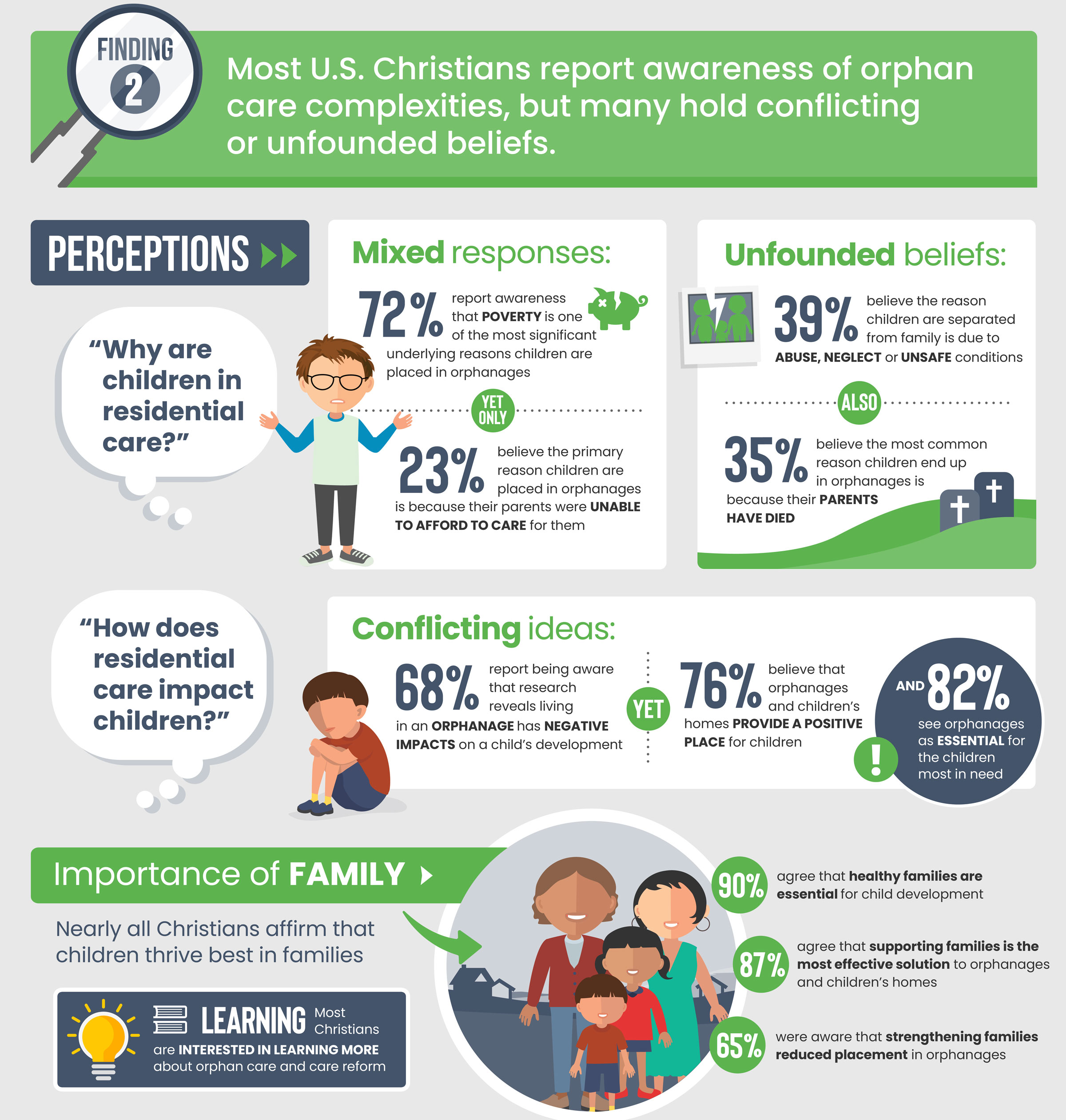
Most U.S. Christians report awareness of orphan care complexities, yet misconceptions persist. While 72% say they are aware that poverty is a major driver of orphanage placement, only 23% correctly identify poverty as the most common reason, with many instead citing abuse, neglect, or parental death. Similarly, although 68% acknowledge research showing negative developmental impacts of institutional care, a majority still view orphanages positively and as essential.
At the same time, Christians strongly affirm family-based care. Ninety percent agree children thrive best in families, and most believe supporting families is the most effective solution.
Change Over Time: 2020–2025
Since 2020, knowledge and attitudes related to orphan care have shifted meaningfully, though behaviors have not.
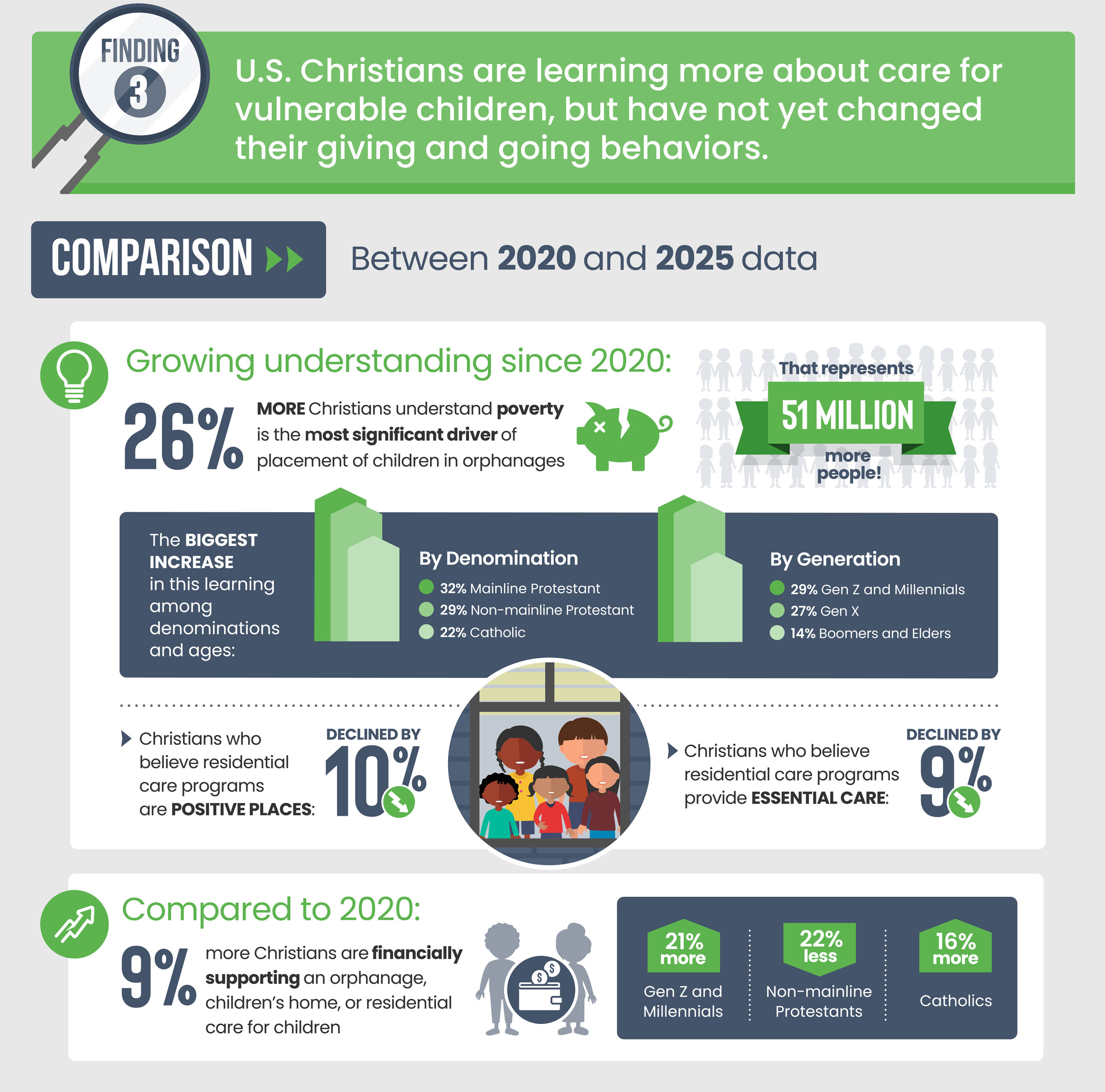
Understanding of poverty as the primary driver of orphanage placement has increased by 26 percentage points, representing approximately 51 million additional people, with the largest gains among mainline and non-mainline Protestants and Gen Z and Millennials.
Positive views of residential care have declined: belief that orphanages are a positive place has dropped by 10 points, and belief in their essential role has declined by 9 points.
Despite these shifts, engagement patterns remain largely unchanged. Compared to 2020, 9% more Christians report financially supporting residential care, with a continued shift toward younger donors and Catholics. Both actual visits to orphanages on mission trips and interest in future visits have remained consistent.