
Journey of Transition Toolkit
Toolkit Home | Learning | Considering the Continuum of Care


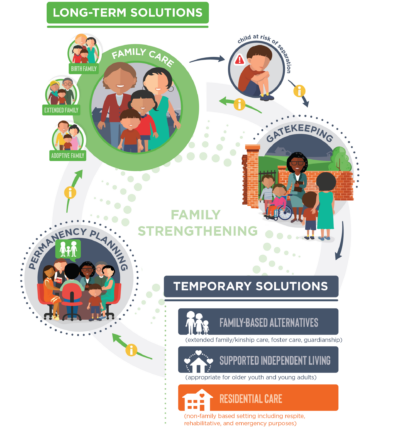
Gatekeeping
Gatekeeping is a term referring to the formal process of assessment and decision-making to determine if a child needs to be separated from his or her family, and if so, what placement will best match his or her individual circumstances and needs. It prioritizes family preservation and alternative family care and is used to prevent the inappropriate placement of children into residential care. For children transitioning out of residential care, gatekeeping procedures are used to determine the best placement option.
Family Strengthening
Programs and services that strengthen families help prevent the separation by equipping birth, foster, and adoptive families with the resources they need for children to thrive. Family strengthening may include ensuring access to education, health, and economic services such as microloans and livelihood support; parent education and support groups; early childhood programs and daycare; respite care; and special needs services.
Family-based Alternative Care
A range of care options are considered when living with his or her birth family is determined to be unsafe or not in the best interests of a child. These options include care within a child’s extended family (also known as kinship care), foster care, and adoption. In most countries, care in extended family is the most long-standing and culturally acceptable form of alternative family care and can be permanent or temporary. Whereas, foster care is the full-time care of a child within a non-related family and may be used temporarily while efforts at reunification with the child’s birth family or placement of the child with a permanent alternative family are made. Lastly, adoption can provide a pathway to a family, but given its permanency, involves multiple levels of gatekeeping before it is determined that a child is available for adoption.
Residential Care
Given the unique nature of each child’s situation, temporary, short-term care in small group homes, shelters, or other forms of residential care are included in the continuum of care. Short-term residential care can vary widely from basic respite care to more targeted therapeutic or rehabilitative services for children and families in crisis. Ideally, these options are temporary and transitional, ultimately leading to family care or, in the case of older youth, supported independent living.